Buying an Older Home in Lakewood: What the Conservation District Boundary Means
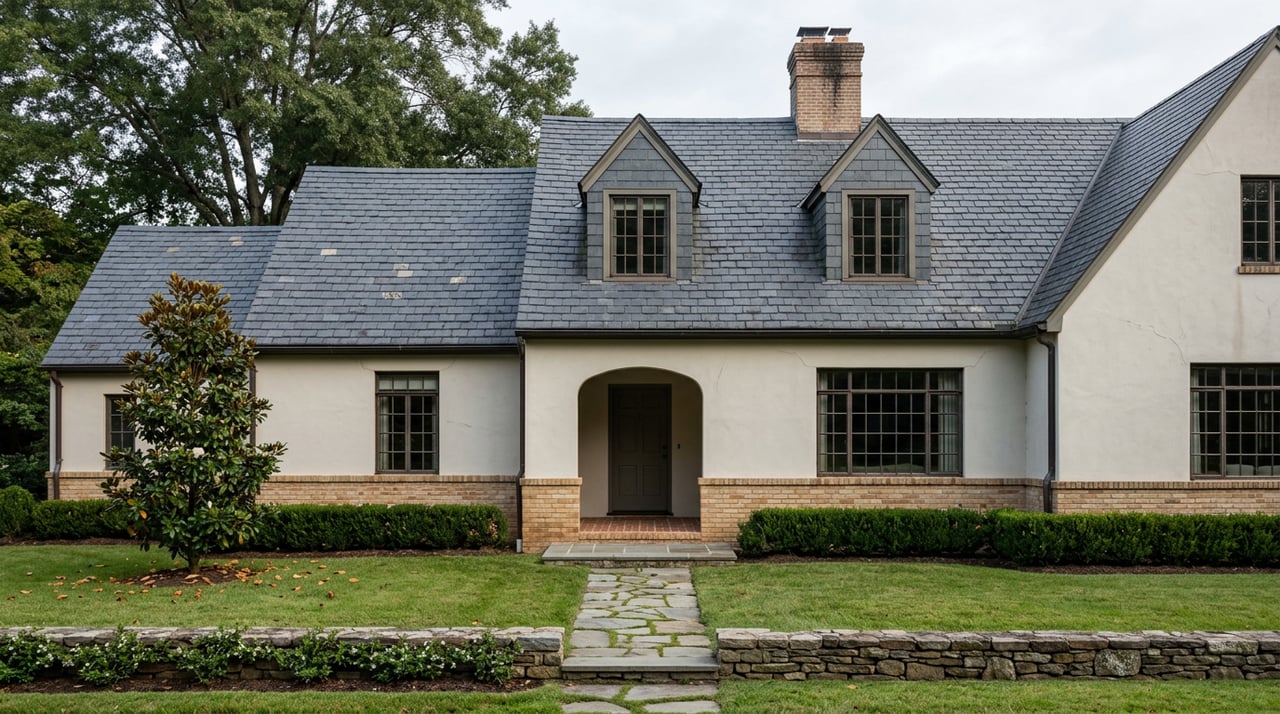
There is an empty lot on Lakewood Boulevard where a Hutsell-designed home used to stand. Architect Clifford Hutsell built some of the houses that give Lakewood its look, the steep tile roofs and stucco walls that show up in architectural field guides of American housing. A Candy's Dirt account notes that the house at 7226 Lakewood fell outside the neighborhood's original conservation district boundary. Preservation advocates cite that lot in nearly every public meeting about expanding the district, because it is the clearest proof of what happens on the wrong side of a line most buyers never think to check.
The Lakewood Advocate reported in February 2025 that the City Council had voted to expand the district. If you are shopping for an older home in Lakewood right now, or you already own one and are thinking about a sale, the boundary matters more than the square footage, the finishes, or the year on the tax record. Two houses can sit three blocks apart and look equally historic, even though they fall on different sides of the conservation district boundary.
Dallas has had a Lakewood Conservation District since 1988, but for nearly four decades it covered only the Country Club Estates subdivision, the roughly 323 homes built starting in 1923 around what is now Lakewood Country Club. The original boundary started at Abrams Road and stopped before it reached Brendenwood or Copperfield, which meant a wide swath of equally old homes on streets like Lakeshore, Avalon, Tokalon, and Westlake had no design review or teardown protection at all.
On February 26, 2025, the Dallas City Council voted unanimously to expand that district after more than three years of neighborhood debate, adding roughly 146 homes across the adjacent Monticello, Westlake Park, and Gaston Place subdivisions. The final map excluded a few contested blocks, including a connecting stretch from Copperfield Lane to Wendover Road and one home on Tokalon Drive, after residents on those blocks pushed back. You can read the adopted boundary and the eligibility findings directly on the City of Dallas planning department's page for the expansion.
That last detail is the one worth sitting with. The vote was unanimous, but the map still has carve outs. A property a hundred feet from a protected block can still fall outside protection. Nobody guessed correctly just by knowing the neighborhood name.
The district is intended to preserve the visual character of the block. A house inside the district can still have knob and tube wiring, an aging sewer line, or a foundation that has moved twice since the Reagan administration. The boundary says nothing about the condition of the inside.
That distinction should reshape how you read an inspection report on an older Lakewood property. Conservation District status tells you about the block. It does not tell you what you are buying.
The homes protected by the expanded district, and plenty just outside it, were built mostly from the 1920s through the 1950s, starting with Country Club Estates in 1923. That vintage carries predictable, well-documented risk categories that any Lakewood-specific inspector will flag.
| Add-on inspection | Typical cost | Why it matters here |
|---|---|---|
| Sewer camera scope | $150 to $300 | Homes built before 1980 in this part of Dallas commonly still run cast iron drain lines, and cast iron has a service life of roughly 50 to 75 years |
| Structural engineer's foundation letter | $300 to $780 | Most of this housing stock sits on pier and beam foundations over expansive clay, and a standard visual inspection is not a substitute for a measured engineer assessment |
| Full foundation repair, if warranted | $2,800 to $10,000, more for severe cases | Typical fixes use 8 to 15 steel or helical piers driven past the active clay layer to stable soil |
None of this is unique to Lakewood. It is common across most of Dallas's pre-1980 housing. What is worth flagging is that some broader regional foundation guides lump Lakewood in with newer, lower-risk pockets like parts of Lake Highlands and describe the combined area as moderate risk, mostly 1980s to 2000s construction. That read does not match what is actually standing inside the conservation district boundary, where the housing stock skews forty to sixty years older than that generalization suggests. If you are comparing inspection risk across neighborhoods using a broad-brush regional guide, ask which specific streets it is actually describing before you use it to budget.
A few steps take the guesswork out of an older Lakewood purchase, whether the house sits inside the expanded boundary or just outside it.
If you own an older home in Lakewood and are preparing to list, the two inspection items most likely to reopen a negotiated price are the sewer line and the foundation. Ordering a camera scope and, if your home shows any sign of movement, a structural engineer's letter before you go on the market gives you two things a reactive seller doesn't have: time to fix a real problem on your own schedule, and documentation that heads off a buyer's inspector finding something first. Pairing that groundwork with the kind of make-ready preparation that speaks directly to a buyer's confidence, rather than just cosmetic staging, tends to keep older Lakewood listings moving instead of stalling in renegotiation.
If you want to understand what pre-1960s Lakewood construction actually looks like before you're standing in one during an option period, the Lakewood Early Childhood PTA's annual home tour is the easiest way in. The tour has run since 1976 and benefits Lakewood Elementary, J.L. Long Middle School, and Woodrow Wilson High School. This year's dates are November 7 and 8, 2026, with past lineups including homes originally built by the same firms, like Dines and Kraft, whose work defines the district's protected streets. Walking through a handful of these houses gives you a feel for room proportions, window styles, and roof pitch that no listing photo captures.
How do I check whether a specific Lakewood address is inside the conservation district? The City of Dallas planning department maintains the adopted boundary map for the Lakewood Conservation District expansion. Confirm the specific parcel rather than relying on the general reputation of the street, since the final 2025 map excludes a few blocks that were part of earlier drafts.
Does conservation district status help or hurt resale value? City planning staff who worked on the Lakewood expansion have noted that home values generally trend upward inside conservation districts nationally, largely because the designation limits the kind of out-of-scale new construction that can make an existing home look and feel outdated by comparison.
If my inspector finds cast iron sewer pipe, does that kill the deal? Not automatically. Older pipe is common and does not always mean failed pipe. A camera scope tells you the actual condition, and many buyers negotiate a repair credit or price adjustment rather than walking away, especially once they know the real cost range going in.
Buying or selling an older home in Lakewood rewards the kind of specific, parcel-level homework most national advice skips. If you want to know exactly where a property sits relative to the current district boundary, or you're weighing whether to list a historic home this fall, The Blackman Group can walk the specific block with you. Request a complimentary neighborhood consultation and we'll pull the boundary map before you ever schedule a showing.
This article is general information, not legal, tax or financial advice. Consult a qualified professional about your situation.
What drives The Blackman Group forward is our shared objective to serve clients at the highest level of professionalism, enthusiasm, and energy. Whether helping clients with a sale, a purchase, a lease, a relocation, or an investment, TBG operates with the standard that every transaction be a "'win" for our clients.
The Blackman Group
5960 BERKSHIRE LN STE 700 DALLAS TX 75225