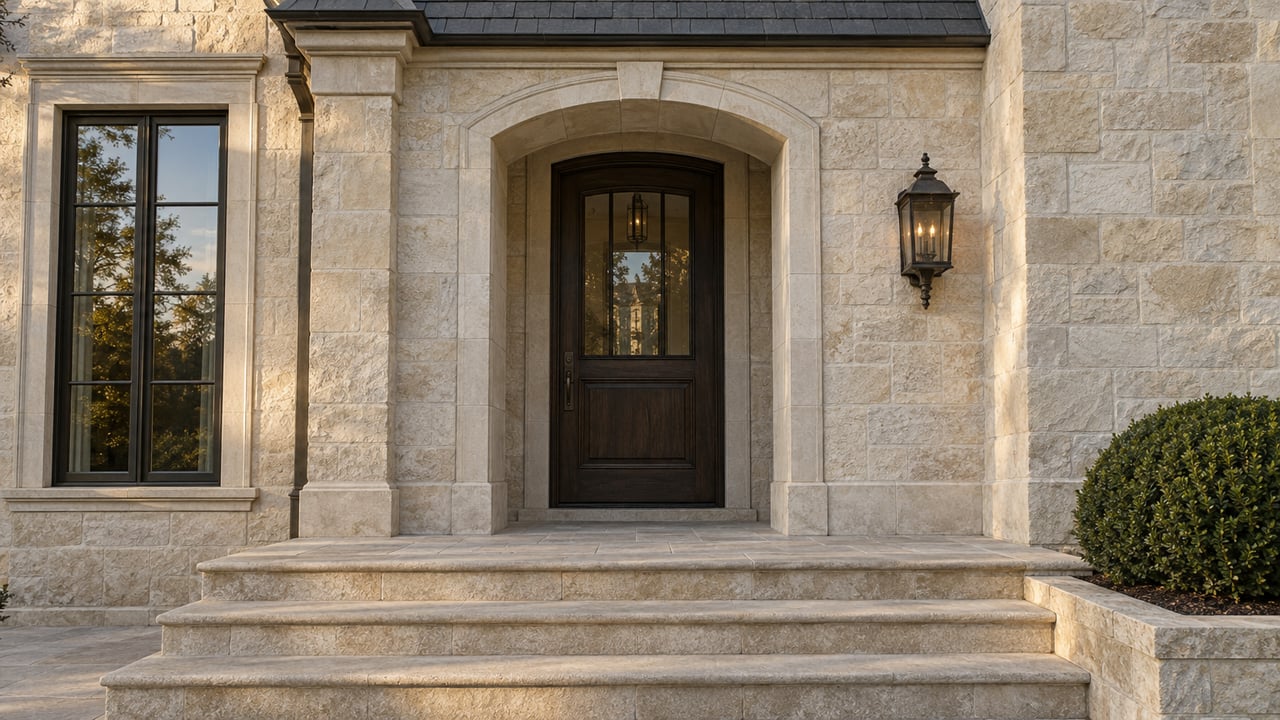
What Your Highland Park Tax Bill Looks Like the Year After You Buy
In late March 2026, a six-bedroom house on Saint Johns Drive went on the market for $24.9 million. It closed within weeks. What made the address rare, even by Highland Park standards, was the creek running behind it. What made the sale worth watching from a tax standpoint was a different number entirely: at the time of closing, the Dallas Central Appraisal District had the property valued at $11.8 million for tax purposes.
That is not a typo and it is not an error on anyone's part. It is what happens when a home sits under Texas's homestead cap for years while the market keeps moving. The gap between the two figures, roughly $13 million on paper, is the exact mechanism every Highland Park buyer eventually meets after closing, just usually at a smaller scale. Understanding how that gap forms, and what happens to it the moment you sign, matters more than almost any other line item you'll see between contract and your first tax bill.
Texas law limits how fast a homesteaded property's assessed value can rise each year, no matter what the market does. Under Texas Tax Code Section 23.23, once a home carries an active homestead exemption, its taxable value can increase by no more than 10% over the prior year's figure, plus the value of any new improvements. If a home was assessed at $2 million last year and the market pushes it to $2.5 million this year, the taxable value can only climb to $2.2 million. The rest of the appreciation sits on the books as unrealized, at least for tax purposes, and stays there as long as the same owner holds the exemption.
The cap has a second, less advertised feature. According to the Dallas Central Appraisal District's own explanation of the rule, the limitation is removed whenever there is a change in ownership, and it does not start protecting a new owner until the first full tax year after they receive their own homestead exemption. In practice that means a buyer's first year in a home can be assessed at full market value, with no 10% ceiling at all, because the cap clock hasn't started running yet.
A capped value only drifts away from market value one year at a time, at 10% a year, compounding. The longer a single owner holds a property, the more room that gap has to open, and Highland Park has more of those long holds than most Dallas neighborhoods, because turnover here is genuinely slow. Zillow's tracked average home value for Highland Park stood at $2,799,655 as of late June 2026, up 3.9% over the prior year, a pace that outstrips what any capped assessment is legally allowed to match unless the home recently changed hands.
The Saint Johns Drive sale is the extreme version of an ordinary pattern. A home held under a decades-old capped value can trail the true market by an amount that looks less like a rounding difference and more like a second mortgage's worth of taxable value, waiting to appear the moment a deed changes hands.
Here is the sequence, in the order it actually happens to a buyer:
| Seller's last notice | Buyer's first notice | |
|---|---|---|
| Assessed value basis | Prior year's capped value, plus up to 10% | Full purchase price, reassessed by DCAD |
| Cap protection | Active, has applied for years | None until the first full tax year after you receive your own exemption |
| What the number reflects | Years of 10%-per-year growth trailing the market | Whatever the home is actually worth today |
The seller's final tax bill, and the one that shows up in a home's public tax history, was never a forecast of what the buyer would owe. It was the output of a formula that had been running in the seller's favor for however many years they'd owned the home. The moment ownership transfers, DCAD starts over, and the new number is anchored to the price on the closing statement, not the capped figure the seller had been paying against.
None of this changes because a buyer applies for a homestead exemption right away. According to PropertyTaxes.law, the exemption reduces the taxable value used to calculate the bill by $140,000 on the school district portion for 2026, but it does not blunt the reassessment itself, and it does not activate the 10% cap in year one. Filing early still matters. It just doesn't do the job most buyers assume it does.
The Town of Highland Park sets its own tax rate independently each year, based on its budget and whatever taxable values DCAD certifies, and that rate applies against this new, uncapped number for at least one full tax year before the cap has any chance to start working in the buyer's favor.
A few things are worth handling in the weeks after closing, not the weeks before the deadline:
Does the seller's last tax bill tell me what I'll owe? No. It reflects their capped assessed value, which may have been compounding at 10% a year for a decade or more. Your first bill is built from your purchase price.
When does the cap start protecting me? The year after you first qualify for your own homestead exemption. If you close and file in 2026, the cap doesn't begin limiting increases until January 1, 2027 at the earliest.
Can I still protest the value even though I just bought the home? Yes. A protest challenges the market value DCAD assigned, and a recent, arm's length purchase price is often the clearest evidence available, for or against that number.
Does filing the homestead exemption lower my first-year bill by much? It reduces the taxable base by the exemption amount, $140,000 for the school district portion in 2026, but it applies after DCAD has already reassessed to market value. It softens the number. It does not undo the reset.
Buyers who walk into Highland Park treating the seller's old tax line as a preview of their own are almost always surprised by the first real notice. The mechanism isn't a secret, it's just rarely explained before someone owns the number themselves. If you're weighing an offer in Highland Park and want to see what that first-year reassessment is actually likely to look like before you're locked into a contract, The Blackman Group can walk through it with you as part of a complimentary neighborhood consultation.
This article is general information, not legal, tax or financial advice. Consult a qualified professional about your situation.
What drives The Blackman Group forward is our shared objective to serve clients at the highest level of professionalism, enthusiasm, and energy. Whether helping clients with a sale, a purchase, a lease, a relocation, or an investment, TBG operates with the standard that every transaction be a "'win" for our clients.
The Blackman Group
5960 BERKSHIRE LN STE 700 DALLAS TX 75225