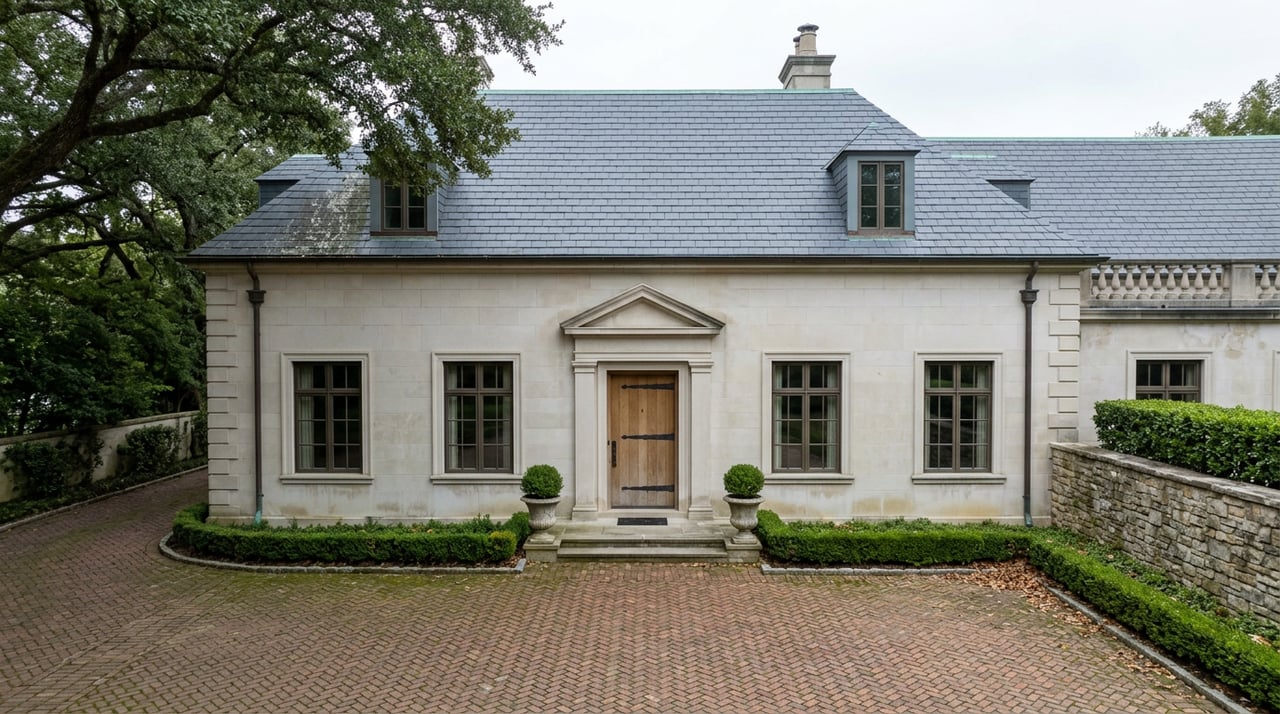
What $2 Million Actually Buys in Preston Hollow
Ask three different pricing tools what a home costs in Preston Hollow and you will get three different medians, and every one of them will be defensible. One will tell you the neighborhood's median sale price sat near $2.2 million in February 2026. Another will put it closer to $2.5 million for January 2026. A third, pulling in every condo and starter house alongside the estates, will land closer to $1.2 million over a trailing twelve months. None of these numbers is wrong. They are just describing three different neighborhoods that happen to share a name, a school-zone map that splits down the middle, and one highway that quietly decides which market you are actually shopping.
If you are comparing Preston Hollow to Highland Park or University Park right now, the single most useful thing you can do is stop asking "what's the median" and start asking "which of the three Preston Hollows am I looking at." Here is how to tell them apart, and why one of the neighborhood's busiest intersections is currently in the middle of a zoning fight that matters more than any of the price charts.
Preston Hollow's traditional boundaries run along Midway Road, Northwest Highway, Hillcrest Avenue, and Royal Lane, but the line that actually separates one pricing tier from another is the Dallas North Tollway.
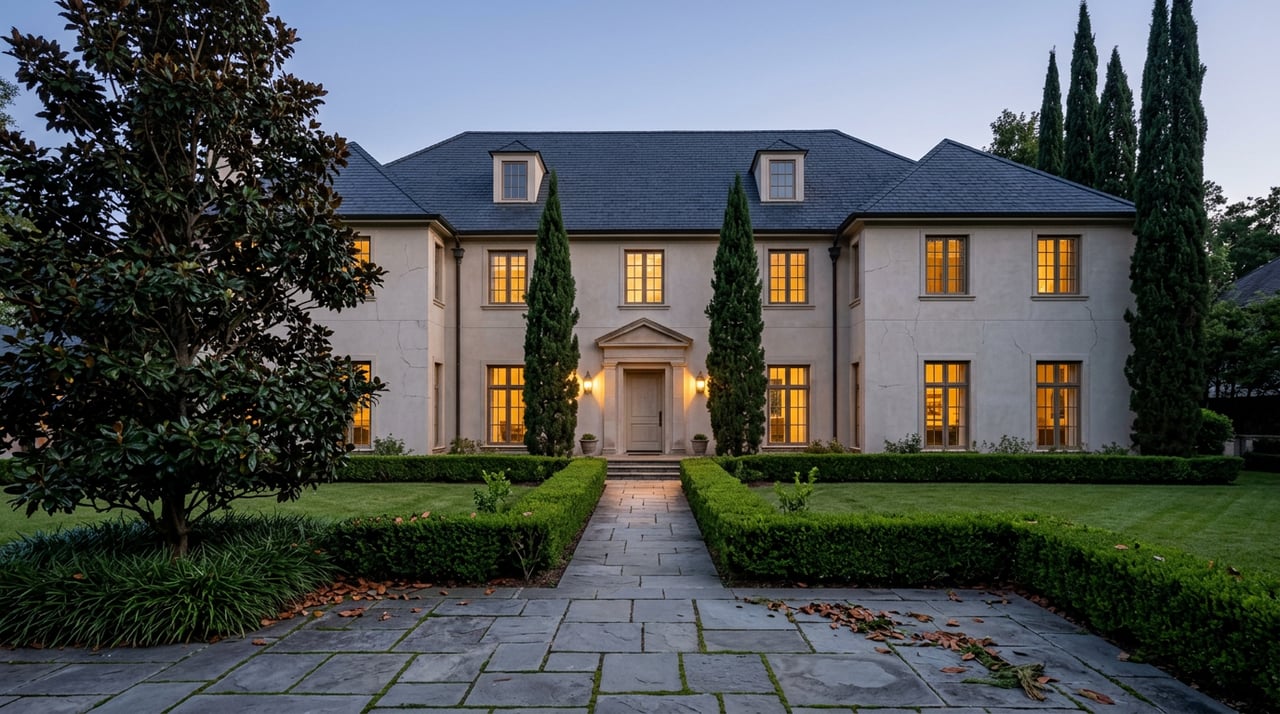
West of the Tollway is Old Preston Hollow, the estate section that includes Strait Lane, Volk Estates, and the streets locals mean when they say "the Estate Area." Lots here run one to six acres, prices routinely fall between $3 million and $20 million or more, and the terrain itself is different: rolling hills and creek beds rather than the flat grid most of Dallas is known for, with winding private drives and few sidewalks by design.
East of the Tollway, the personality shifts. Lots are still generous by Dallas standards but noticeably more modest in scale, and prices typically land between $1.5 million and $4 million. What you gain instead is walkability: Central Market, the Preston Royal shopping center, and Texas Health Presbyterian Hospital are all within an easy trip, making day-to-day errands genuinely convenient in a way the estate section, built for privacy over proximity, was never meant to be.
A buyer comparing a $2.8 million listing on each side of that highway is not comparing two similar homes. They are comparing two different value propositions, and no median price captures that difference.
Layer a second distinction on top of geography and the picture gets sharper. Preston Hollow's inventory sorts into three tiers that behave like three separate markets:
| Tier | Typical Lot | Price Band (early 2026) | Where It Sits |
|---|---|---|---|
| Standard | Under 1 acre | $1M – $3M | Bulk of transaction volume neighborhood-wide |
| Estate | 1 – under 3 acres | $3M – $10M | Bulk of luxury activity, concentrated west of the Tollway |
| Trophy | 3+ acres | $10M – $50M+ | Strait Lane, Park Lane, Walnut Hill Lane, Volk Estates |
The standard tier is where most actual sales happen. The estate tier is where most of the neighborhood's luxury reputation comes from. The trophy tier barely trades on the open market at all. Properties on Strait Lane in particular change hands through long-established broker relationships more often than public listings, so what you see advertised is a fraction of what is actually transacting. That gap between visible inventory and real inventory is worth remembering if a search feels thinner than the neighborhood's reputation suggests it should.
Here is the mechanism that explains why Preston Hollow's price per square foot runs well below a neighborhood like Highland Park or University Park despite comparable or higher total prices. As of a January 2026 snapshot, Preston Hollow was trading around $345 per square foot against roughly $628 per square foot in the Park Cities. That is not a value signal in the way it sounds. It is a land signal.
A meaningful share of Preston Hollow's original housing stock dates to the 1920s through the 1950s, and on the better lots, buyers are increasingly purchasing the land and treating the existing structure as a placeholder until permits clear. Appraisers and agents already treat this pattern as its own category of comparable sale, distinct from a renovated or move-in-ready home on the same block. That is the real reason the neighborhood's dollar-per-square-foot figure looks like a bargain next to the Park Cities: a large share of what's being sold is dirt, not finished living space, and dirt doesn't price the same way a renovated kitchen does.
This also explains an architectural quirk. Builders and homeowners work within the City of Dallas's standard building codes and setback requirements, which is a meaningful part of why you'll find a 1950s ranch, a French chateau, and a glass-walled contemporary build on the same street with no single style enforced. It also means due diligence on a teardown candidate runs through the City of Dallas's own permitting and floodplain review process rather than a neighborhood design board, which changes the timeline math for anyone planning to build rather than buy finished.
If you are shopping anywhere near the intersection of Preston Road and Royal Lane right now, there is a live piece of due diligence that no price chart will surface for you.
The southwest corner of that intersection, currently a low-rise commercial strip with tenants like Gazebo Burgers, Escondido Tex-Mex, and a Chase Bank branch, has sat partly vacant since an EF-3 tornado tore through the area in 2019. Developer Leland Burk and partner Greenway Investment Company have spent 2026 trying to redevelop that site into a mixed-use project that started as a $650 million proposal for towers up to 325 feet and, after months of negotiation, is now an $800 million plan for a 19-story hotel-condo tower reaching 240 feet, an 18-story apartment building at 210 feet, and a 12-story office component. People Newspapers reports that current zoning caps the site at 54 feet.
On August 6, 2026, the Dallas City Plan Commission voted 10 to 4 to recommend approval, sending the case to the Dallas City Council for a final vote that has not yet been scheduled. Opposition has been organized and specific: of 283 nearby property owners the city notified ahead of that vote, 261 opposed the project and only 8 supported it, according to Dallas Morning News reporting on the hearing. A neighborhood nonprofit called Preserve Preston Hollow has collected more than 4,500 petition signatures, and in early August a new coalition called D13 Together, representing Preston Hollow alongside Bluffview, Melshire Estates, and other District 13 neighborhoods, went so far as to threaten a recall campaign against Council Member Gay Donnell Willis if she doesn't work to delay the case.
This matters for a buyer in a very concrete way. If your search puts you within a few blocks of Preston and Royal, you are buying into a property values conversation that is still being negotiated at City Hall, not one that's already settled. It's a different situation entirely from the $200 million reimagining of Preston Center a short distance away, where RAMROCK Real Estate, Lincoln Property Company, and HKS Architects broke ground in March 2026 on a project adding Class AA office space, residential units, and a rooftop park with far less neighborhood resistance and a first phase expected in late 2028. Same corridor, same year, two very different levels of controversy. Ask any listing agent representing a home in that stretch whether the property sits within the notification radius of the Preston-Royal case, and get the answer in writing before you're deep into a contract.
Preston Hollow's median sale price climbed 15.6 percent year over year as of February 2026, but homes were also taking 81 days to sell on average, compared with 39 days a year earlier, and monthly closed sales dropped from 42 to 30 over that same stretch. Read together, that's not a market losing steam. It's a market where buyers have become more selective about which of the three tiers, and which side of the Tollway, they're actually willing to pay for, and sellers who price to the wrong comp set are sitting longer as a result.
If you're cross-shopping Preston Hollow against Highland Park or University Park, the honest comparison isn't median to median. It's asking what you're trading: the Park Cities' own municipal services and finished-square-foot premium against Preston Hollow's larger lots, architectural freedom, and lower dollar-per-square-foot land economics. Neither answer is right for every buyer. It depends on whether you're buying a finished house or buying room to build one.
Is all of Preston Hollow zoned to Dallas ISD? Most of it, yes. A small southeastern pocket, generally east of the Dallas North Tollway and south of Walnut Hill Lane, falls within Highland Park ISD instead. Confirm zoning for a specific address before writing an offer, since the boundary runs through the middle of the neighborhood rather than around its edge.
What should I check before building new construction? Check City of Dallas requirements before building. New construction still requires standard City of Dallas building permits.
How would the Preston-Royal case affect a home I'm considering nearby? The City Council vote hasn't been scheduled yet, so the outcome and final building heights remain unresolved. If you're considering a property within a few blocks, ask your agent to check whether it fell within the city's notification radius for the case and to flag any update before closing.
The number on the listing page was never going to tell you which Preston Hollow you were buying into. That takes someone who can read the tollway, the tier, and the zoning docket the same way they read a floor plan. That's the kind of ground-level read Chris Blackman and the team built their name on, one street and one City Plan Commission agenda at a time. If you're weighing a move into Preston Hollow, or trying to figure out whether a specific lot is worth more as a renovation or a rebuild, request a complimentary neighborhood consultation and we'll walk the comps, the corner, and the calendar with you before you make an offer.
This article is general information, not legal, tax or financial advice. Consult a qualified professional about your situation.
What drives The Blackman Group forward is our shared objective to serve clients at the highest level of professionalism, enthusiasm, and energy. Whether helping clients with a sale, a purchase, a lease, a relocation, or an investment, TBG operates with the standard that every transaction be a "'win" for our clients.
The Blackman Group
5960 BERKSHIRE LN STE 700 DALLAS TX 75225