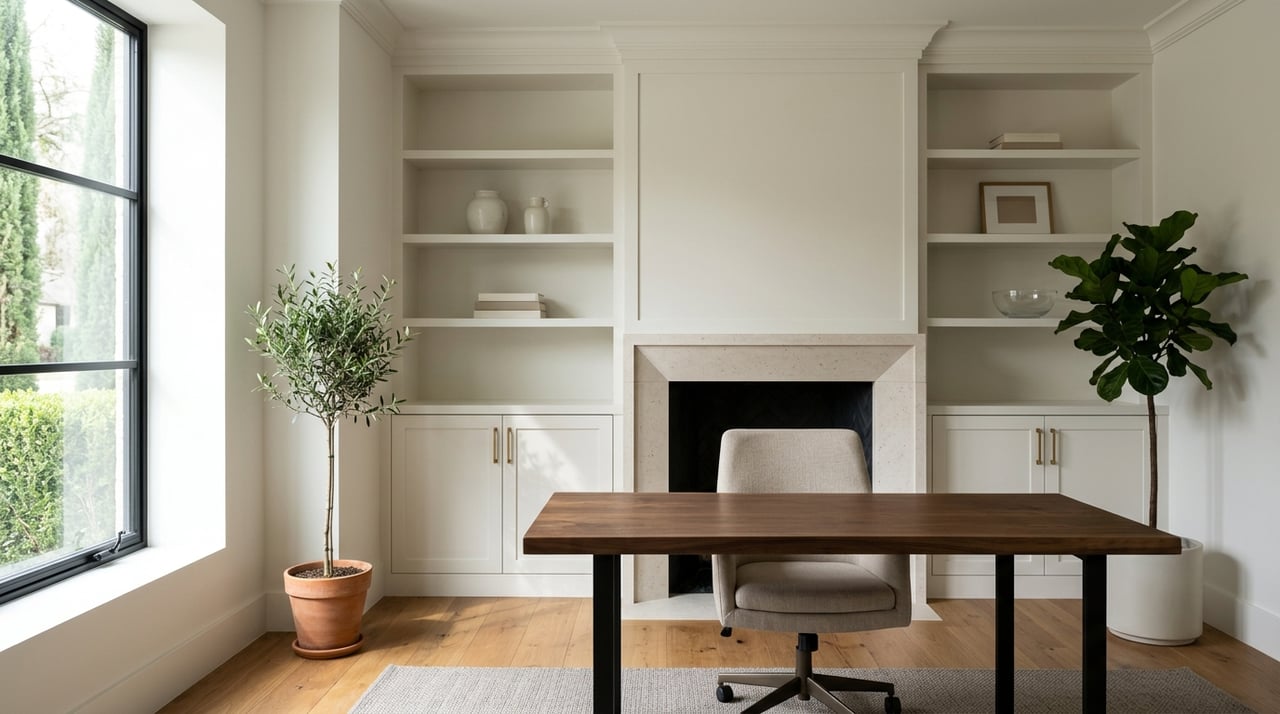
Add On Or Trade Up? Space Decisions For University Park Homeowners
Wondering whether to expand your current home or buy a larger one in University Park? You are not alone. In a small, high-value market where lot constraints and low inventory both shape your options, this decision is as much about logistics as lifestyle. This guide will help you weigh what makes sense for your space needs, your timeline, and your next move. Let’s dive in.
University Park is a compact city of just 3.73 square miles, with 6,927 residential parcels and a housing mix that is heavily single-family. City data shows that 79% of parcels are classified as single-family homes, and the average single-family home market value is $2,466,515. In a market like this, gaining space is rarely simple.
Because the city is built out and land is limited, your choice often comes down to what your lot can support versus what the market can provide. Even if you love your location, that does not always mean an addition is practical. On the other hand, moving up nearby can also be challenging when available inventory stays relatively tight.
If you like your current block, your lot has room to grow, and you only need a modest amount of extra space, an addition can be a strong lifestyle choice. Many homeowners choose this path when they want a better-functioning home without giving up a familiar location. In University Park, that often means creating one or two needed spaces instead of making a major jump in square footage.
The 2025 Remodeling Impact Report found that adding a primary bedroom suite earned a Joy Score of 10. The same report notes that homeowners often remodel to improve livability, update worn finishes, boost energy efficiency, or make the home work better for daily life. That matters because space decisions are not just financial. They are also personal.
A lot of owners also use home equity to fund remodeling. According to the same report, 54% of consumers used a home equity loan or line of credit for remodeling projects. If you have substantial equity in your current home, adding on may feel more manageable than buying again in an expensive market.
An addition may be worth exploring if:
That said, workable is not the same as guaranteed. In University Park, the details matter at the property level.
Before you fall in love with a floor plan, it helps to know what may stand in the way. University Park requires building permits for most additions and remodels, and as of January 1, 2025, the city requires a comprehensive pre-submittal assessment meeting for building permit applications. That adds an important early checkpoint to the process.
Lot configuration can also affect what is possible. The city states that if a single-family project uses only part of a lot or combines portions of several lots, an amending plat must be approved before the building permit can be issued. If you want to split one lot into two smaller lots, a replat is required.
Setbacks are another major factor. University Park has a separate front yard setback resource, and city staff can answer questions about setback requirements and district-specific details. In practical terms, that means you should verify buildability for your exact property instead of assuming a general rule applies.
One of the biggest design constraints in University Park is impermeable-surface coverage. The city limits lot coverage based on lot size, including:
Driveways in the required front yard do not count toward lot coverage, but total paving in the required front yard is capped at 50%. If your lot is already close to these thresholds, adding on may require tradeoffs that make the project less appealing.
Some homeowners assume they can request a variance if the design does not fit. In University Park, that is not a broad fallback option. The Board of Adjustment can hear hardship cases tied to the shape, size, or terrain of a property, but financial hardship or self-imposed hardship does not qualify.
The city also states that no construction is allowed over utility easements. Construction work is prohibited on Sundays and certain holidays as well. Those rules can affect both design and timeline.
There is another important threshold to know. University Park says that if more than 50% of a structure is demolished, the project is treated as a complete demolition and rebuild under current city building and zoning codes.
That can change the scope, cost, and complexity of your plan. The city also increased FY2026 building permit fees for new construction, remodels, and additions effective October 1, 2025. If your vision is close to a teardown-level project, it may be smarter to compare that path against trading up.
Sometimes the easiest way to get more space is to buy a home that already has it. If you want a major increase in square footage, a different layout, or a lot with fewer constraints, trading up can save you from a long design and permitting process.
This option can be especially attractive if your current lot is limited by setbacks, impermeable-surface caps, easements, or platting issues. Instead of forcing a complicated project, you can focus on finding a home that better matches your long-term needs from day one.
For some households, moving also avoids the disruption of living through construction. If your timing matters, or you want a cleaner transition into your next chapter, buying another home may feel more straightforward.
The challenge, of course, is that University Park is still a competitive place to buy. Over the three months ending May 2026, the median sale price was $2,498,505, up 4.5% year over year. Homes sold in an average of 23 days, and many received multiple offers.
Sales volume tells another part of the story. Redfin reported 50 homes sold in May 2026, down from 84 a year earlier. That suggests fewer opportunities even as demand remains strong.
For a broader look at nearby supply, Realtor.com reported 111 homes for sale in ZIP code 75205 in May 2026, with a median listing price of $2,637,000 and a median of 38 days on market. Active listings were down 10.77% year over year while the median listing price rose 11.41%. Since 75205 includes both University Park and nearby Park Cities areas, that is a broader proxy, but it still points to an expensive and relatively thin market.
If you are trying to decide purely on return, additions often disappoint on paper. The Dallas 2025 Cost vs. Value report shows that a primary suite addition typically recoups about 33.2% of cost for a midrange project and 18.8% for an upscale project.
That does not mean adding on is a bad idea. It means additions are usually best justified by how much better the home works for you, not by expecting full cost recovery at resale. If you plan to stay and enjoy the space, the value equation can still make sense.
By contrast, trading up means paying current market pricing for that extra square footage. In University Park, those prices are high. So the smarter financial choice often depends on how much space you need and how long you expect to stay.
If you only need a little more room and your lot can support it, adding on may be the better fit. If you need a much larger home, or your property faces code and design limitations, moving up is often cleaner and more predictable.
Here is a simple way to frame it:
| If this sounds like you | The better option may be |
|---|---|
| You need one or two extra rooms | Add on |
| You love your current location and want to stay | Add on |
| Your lot appears to have room within city rules | Add on |
| You need a major jump in square footage | Trade up |
| Your lot is constrained by setbacks, coverage, or easements | Trade up |
| You want to avoid a long construction process | Trade up |
The key is not choosing the option that sounds best in theory. It is choosing the one that fits your property, your budget, and your goals in today’s market.
In University Park, this is one of those decisions where local knowledge matters. A general contractor can help you understand build costs, but you also need a realistic picture of what buyers are paying for larger homes nearby and how your current home fits into that market.
That is where a real estate strategy conversation can be useful before you commit either way. If adding on, you want to know whether the investment supports your long-term plans. If trading up, you want to understand inventory, pricing, and whether off-market opportunities could widen your options.
For many homeowners, the smartest first step is comparing both paths side by side before spending money on plans or preparing to list. That creates a clearer, calmer decision process and helps you move forward with confidence.
If you are weighing whether to expand your current home or make a move in University Park, Chris Blackman can help you compare your options with a practical, neighborhood-informed strategy.


What drives The Blackman Group forward is our shared objective to serve clients at the highest level of professionalism, enthusiasm, and energy. Whether helping clients with a sale, a purchase, a lease, a relocation, or an investment, TBG operates with the standard that every transaction be a "'win" for our clients.
The Blackman Group
5960 BERKSHIRE LN STE 700 DALLAS TX 75225