Which Lakewood Dallas Home Style Fits Your Life?
Looking at homes in Lakewood can feel a little like walking through a design timeline. On one block, you might see a steep-roof Tudor with leaded windows, and on the next, a low-slung ranch or a newer modern home with walls of glass. If you are trying to figure out which style fits your life, it helps to know what makes each one distinct and what tradeoffs often come with the charm. Let’s dive in.
Lakewood’s housing story is rooted in early-to-mid 20th-century development. According to the City of Dallas, many of the blocks tied to Lakewood’s conservation work were largely developed from 1925 to 1946, which helps explain why so many homes reflect revival-era architecture.
That same city research shows just how varied the neighborhood is. In the draft expansion area, Tudor homes make up the largest share, followed by Spanish Eclectic, with smaller counts of French Eclectic, Minimal Traditional, Colonial Revival, Neoclassical, Ranch, Mid-Century Modern, Contemporary, and New Traditional homes.
Lakewood’s setting also shapes how the neighborhood feels. Historic city documents describe development that worked with the natural landscape, which is part of why you see rolling lots, mature trees, and homes that feel connected to the nearby White Rock Lake setting.
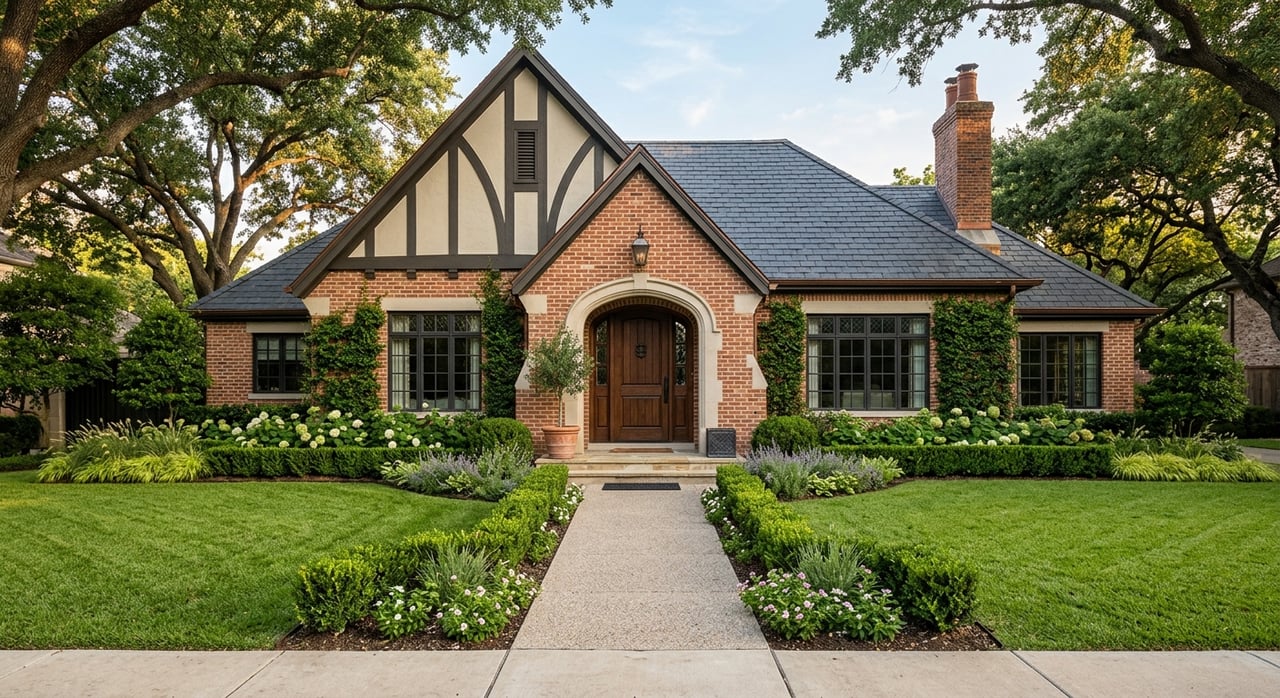
For many buyers, Tudor Revival is the first style that comes to mind when they think of Lakewood. It is one of the most recognizable looks in the neighborhood and remains a defining part of its architectural identity.
The City of Dallas describes Tudor homes as having steeply pitched roofs, asymmetrical forms, multiple front-facing gables, prominent chimneys, tall narrow windows, decorative half-timbering, and masonry or stucco walls. In Lakewood, these details often create a storybook look that stands out from the street.
You may also notice that many Tudor homes have a strong sense of presence without feeling oversized. The rooflines, chimney details, and window patterns do a lot of the visual work.
Tudor homes often appeal to buyers who want character right away. Original details, distinctive curb appeal, and a sense of history can make these homes feel special in a way that newer construction sometimes does not.
In Lakewood, that appeal is often tied to the neighborhood setting too. Mature trees and winding lots pair naturally with Tudor architecture, which adds to the classic feel many buyers are looking for.
When you tour a Tudor, pay close attention to layout, storage, and natural light. Older homes can offer beautiful windows and architectural detail, but they may also have smaller closets or less flexible storage than a newer home.
It helps to think beyond the first impression. A charming facade matters, but your day-to-day experience will come down to how the rooms flow and whether the home supports your routine.
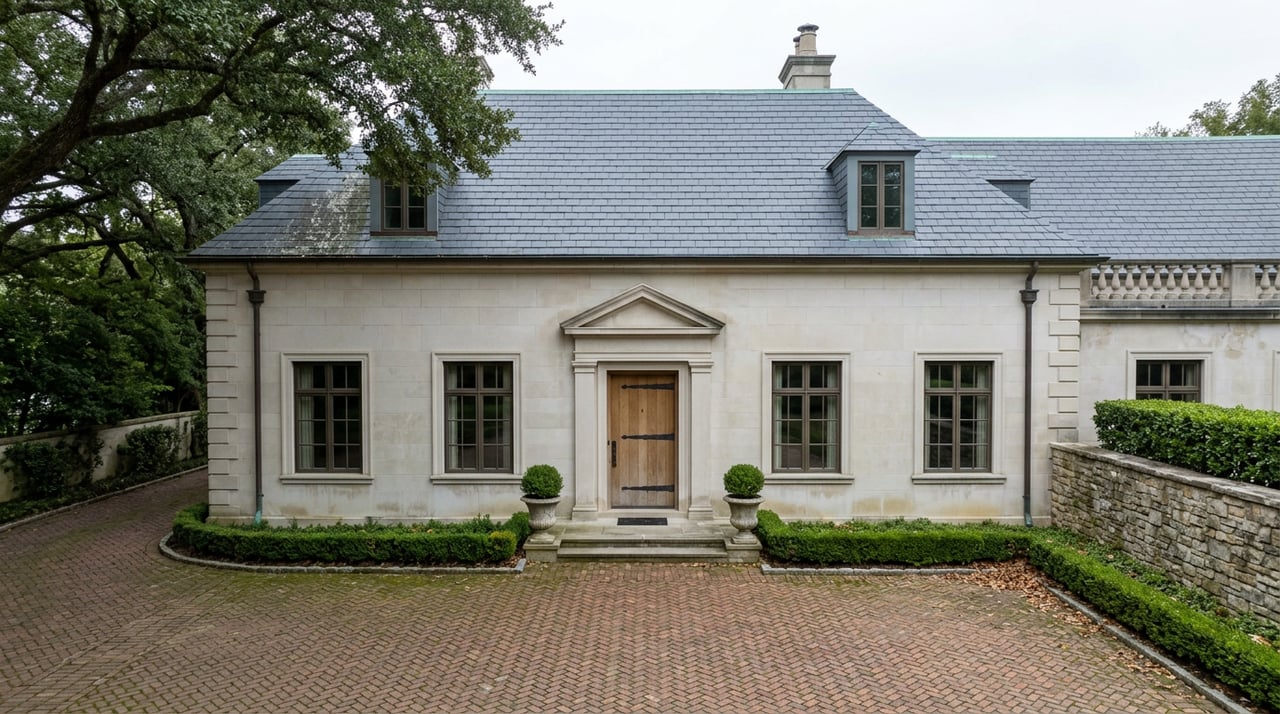
Lakewood is not just a Tudor neighborhood. Spanish Eclectic and French Eclectic homes are also part of the local architectural vocabulary and help create the area’s varied streetscape.
City materials identify Spanish Eclectic as an important Lakewood style, and they highlight features like arches, courtyards, balconies, and tile accents. Dallas landmark records note that Spanish Eclectic was especially popular in the Southwest from 1915 to 1940.
A well-known local example is the Clifford D. Hutsell House at 7035 Lakewood Blvd., which the city identifies as a 1930 Spanish Eclectic landmark. Homes in this style often feel warm, textured, and tied to outdoor living.
French Eclectic, Colonial Revival, and Neoclassical homes also appear in Lakewood’s contributing architecture. While each style has its own details, they all add to the neighborhood’s mix of historic design.
For buyers, this means Lakewood offers more than one version of “classic.” You may prefer the vertical drama of a Tudor, the softer curves of a Spanish Eclectic home, or the more formal symmetry found in other revival styles.
Lakewood also includes smaller bungalow and cottage-scale homes, especially within the broader East Dallas context. These homes can be a great fit if you want character, a manageable footprint, and renovation potential.
Dallas landmark materials describe the Craftsman bungalow as typically one story with a large front porch, wide eaves, exposed rafters, low-pitched roofs, front or side gables, tapered square columns, and a relatively open plan. These details give bungalows a casual, welcoming feel.
In practical terms, bungalows often live differently than larger revival homes. They can feel efficient and charming, with strong front-porch appeal and a more approachable scale.
Character is a big reason buyers love bungalow-style homes. At the same time, reports on older Lakewood housing note that some homes may have small closets, outdated wiring, or cracking foundations.
That does not make them less desirable, but it does mean you should tour with clear priorities. If storage, systems, and future renovation plans matter to you, those should be part of your decision from the start.
Lakewood’s story does not stop in the 1930s and 1940s. The neighborhood also includes later-era ranch, mid-century modern, contemporary, and new traditional homes, with some dating from the 1950s through the 2010s.
City standards for ranch homes emphasize one-story profiles and broader roof overhangs. These homes often feel more horizontal and relaxed than revival-era houses, which can appeal to buyers who want easier everyday flow.
A ranch can also offer a different relationship to the lot. Instead of vertical roof drama or ornamental details, the focus is often on simple lines, practical layout, and connection to the yard.
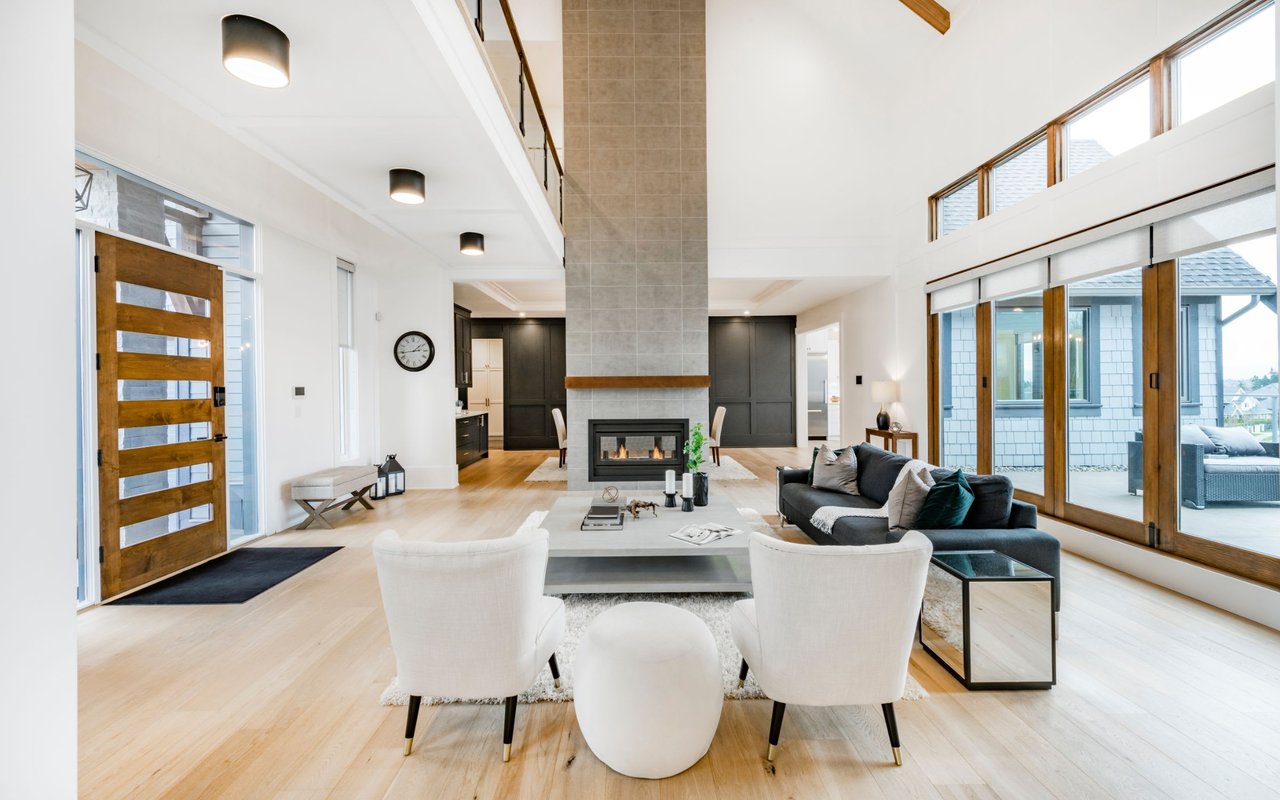
Mid-century modern homes are especially appealing if you like natural light and indoor-outdoor living. Preservation resources describe this style as emphasizing clean lines, minimal ornamentation, flat or irregular rooflines, large glass areas, and open visual connections.
Reporting on Lakewood examples points to floor-to-ceiling windows, open-concept rooms, sliding doors, patios, screened porches, courtyards, and fire-pit seating areas. In a neighborhood shaped by trees, creeks, and proximity to White Rock Lake, those features can feel especially compelling.
Not every buyer wants an older home, and Lakewood has options for that too. Newer modern and new-traditional homes have become part of the neighborhood mix, often trying to bridge established streetscapes with present-day function.
Recent Lakewood profiles show that newer construction may include floor-to-ceiling windows, open floor plans, and stronger visual connections to backyard outdoor living areas. Renovation-focused projects may also preserve a vintage look while adding better storage and modern functionality.
For many buyers, that balance is the draw. You get a home that feels more aligned with current living patterns while still fitting into a neighborhood known for architectural character.
If you love Lakewood but worry about small closets or compartmentalized rooms, newer homes or thoughtful renovations may solve that tension. They can offer pantry space, flexible rooms, and more usable storage without requiring you to leave the neighborhood.
This is where having a clear sense of your priorities helps. Some buyers will happily trade storage for original detail, while others want the look of Lakewood with fewer compromises.
When you walk through homes in Lakewood, style matters, but livability matters more. The most useful side-by-side comparisons usually come down to light, storage, and outdoor space.
Older homes may feature bay windows, leaded glass, and beautiful room definition. Newer homes often lean into larger panes of glass, open living spaces, and stronger backyard views.
Neither is automatically better. The question is which setup fits the way you actually live.
Older Lakewood homes may have smaller closets and less built-in storage. Newer builds and updated homes often add pantry space, flexible rooms, and more practical everyday organization.
As you tour, think about where coats, sports gear, seasonal items, and kitchen overflow would actually go. That simple exercise can reveal a lot.
Outdoor space deserves serious attention in Lakewood. White Rock Lake is a major nearby amenity, with a 9.33-mile trail, bird-watching areas, picnic spots, boat ramps, and other recreation managed by Dallas Parks.
That nearby lifestyle often shows up in the homes themselves. Porches, courtyards, screened patios, covered terraces, and yard-facing living areas can matter just as much as interior square footage.
The best Lakewood home style is not the one with the most buzz. It is the one that matches how you want to live, what kind of maintenance you can take on, and which features matter most to you every day.
If you are drawn to charm and history, a Tudor, Spanish Eclectic, or bungalow may be the right fit. If you want simpler lines, bigger glass, and more open flow, a ranch, mid-century, or newer modern home may make more sense.
Lakewood gives you the rare chance to choose between architectural character and updated function, or find a home that blends both. If you want help narrowing the options and understanding how each style plays out from block to block, Chris Blackman can help you compare homes with a local, practical eye.
What drives The Blackman Group forward is our shared objective to serve clients at the highest level of professionalism, enthusiasm, and energy. Whether helping clients with a sale, a purchase, a lease, a relocation, or an investment, TBG operates with the standard that every transaction be a "'win" for our clients.
The Blackman Group
5960 BERKSHIRE LN STE 700 DALLAS TX 75225